
Before Things Became Things
A series on ambiguity, flow, and formlessness — Part 1
Mike O'Connor
10/20/20253 min read
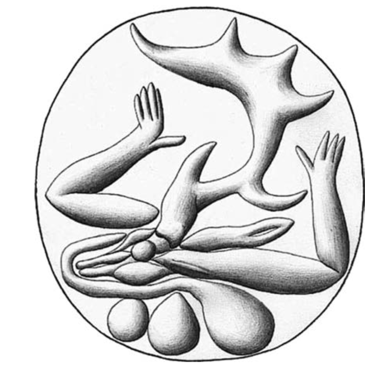
The Minoans built palaces, but they performed their rituals outside them — in caves, courtyards, and open landscapes. Their art teems with fluid symbols: double spirals, women holding snakes, horned creatures with shifting bodies. It’s hard to say where one thing ends and another begins. This wasn’t just aesthetic flair. According to archaeologist Robert Koehl, ambiguity and metamorphosis weren’t marginal curiosities in Minoan culture — they were central. He calls them “pervasive” and “quintessential” traits.
That suggests a worldview in which transformation wasn’t feared or tamed — it was honored. The double spiral doesn’t point to change; it enacts it. These motifs weren’t representations of something else — they were practices in themselves, part of how Minoans made sense of a world in motion.
This orientation stands in contrast to the later Western traditions shaped by Plato and Aristotle, who imagined reality as fixed, orderly, and governed by ideal forms. The Minoan perspective — as glimpsed through material traces like frescoes, votive figures, and sacred sites — hints at something more fluid. Ambiguity wasn’t a problem to be solved. It was part of how they perceived, imagined, and moved through the world.
Ambiguity as Skill
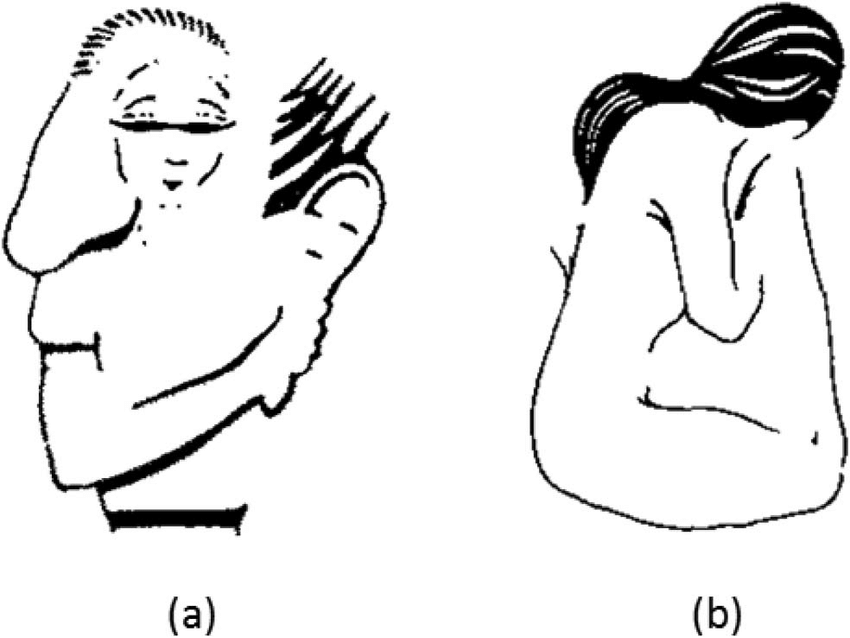
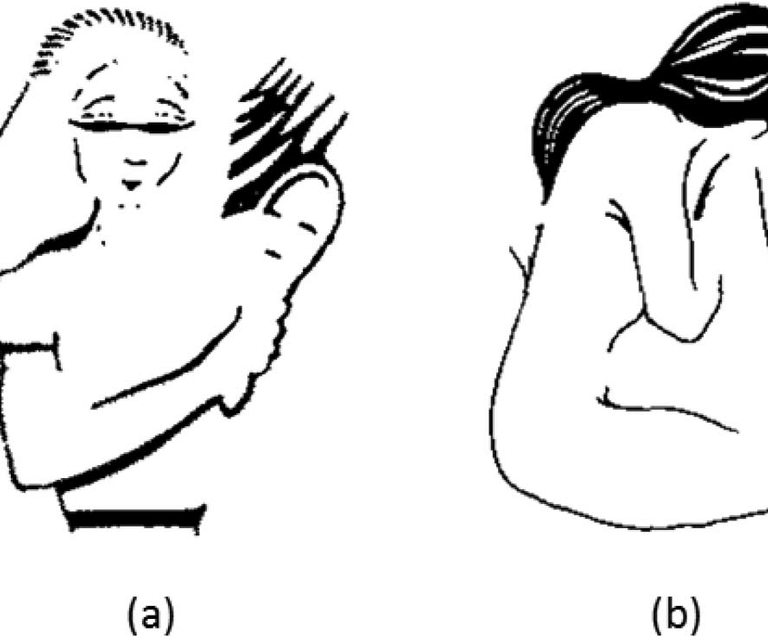
Neuroscientist Semir Zeki takes it further: he argues that our brain is wired for ambiguity. Not to be unclear — but to hold multiple interpretations at once. Ambiguity, then, is a neurological skill. A way to be in the world without forcing resolution. Ambiguity opens. The human brain is designed to perceive multiple interpretations at once — ambiguity is not an error, but a cognitive resource. It allows us to stay with complexity rather than collapse it into categories. It is, as Zeki argues, a fundamental capacity of the visual brain.

Ambiguity as Ancient Technology
Visual culture researcher Christopher Tilley describes this in prehistoric cave art, where overlapping or shape-shifting images deliberately blur distinctions between animals, humans, and tools. A boat becomes a bird. An elk becomes a vessel. Ambiguity in this context is not confusion. It’s a technique. It allows one thing to slide into another, so the image — and the world — stays in motion.
This deliberate ambiguity challenges modern assumptions that clarity is always better. In an era driven by data, identity categories, and hyper-definition, the idea that meaning can emerge through uncertainty feels both foreign and liberating. Ambiguity allows things — and people — to remain in process. Rather than rushing to resolve or explain, we are invited to stay in relation.
Artists, musicians, and choreographers often engage with this very ambiguity — not to confuse, but to provoke new modes of perception. In ambiguous works, the audience is not passive; they participate in the meaning, sensing patterns, resonances, and connections that cannot be pre-decoded. Ambiguity, in this way, becomes a shared space of discovery.
This ancient sensitivity to indeterminacy has artistic echoes as well. In modern material culture studies, objects are understood not as fixed signifiers but as layers of contradictory information — bodies that carry traces of multiple intentions, uses, and meanings. Philosopher Tim Ingold writes that perception isn’t about uncovering what’s already there, but “being present and aware in the very moment of formation.” We perceive by moving — through space, through thought, through feeling.
In this way, the Minoans weren’t ambiguous by mistake. They were perhaps more attuned than we are now to the productive possibilities of ambiguity. They didn’t need to clarify everything. Their rituals didn't require form to be sacred. The divine was already present in things that flickered, transformed, and refused to settle into a single meaning.
What if our contemporary desire to name, define, and fix — in art, identity, body, or truth — is a historical detour? What if flow and formlessness were here first? What might that teach us now?