Why I Chose Tuscany
Gay Men's History
Mike O'Connor
6/2/20263 min read
I didn't choose Tuscany because it's beautiful. Lots of places are beautiful.
I chose Tuscany because Florence was one of the first places in Europe where the individual became a serious subject of attention. Artists stopped painting symbols and started painting people. Philosophers became interested in human experience. The body became something worth studying rather than merely controlling. Desire became something worth depicting. Personality became something worth cultivating.
For a retreat built around the idea of returning to oneself, that feels like fertile ground. As a gay man, I am also drawn to another side of the story.
When most of us learn about the Renaissance, we hear about Michelangelo, Leonardo, Botticelli, the Medici, and the birth of modern art. What we don't often hear is that Florence had such a visible culture of relationships between men that other parts of Europe began using the word "Florentine" as a euphemism for male homosexuality. In the fifteenth century, the city became so concerned with same-sex activity that it created a special magistracy, the Office of the Night, dedicated almost entirely to investigating accusations of sodomy.
Imagine that for a moment.
Not because Florence was uniquely depraved. Quite the opposite. The records suggest that accusations were so common that authorities struggled to control them. Historians estimate that more than half of young men in Florence may have been accused at some point in their lives. The city was not a queer paradise. People were fined, punished, and sometimes exiled. Yet beneath those attempts at control is another story: one of visibility. A story that tells us we were there.
And thats why I chose that as a place to return to.
Many gay men grow up with a strange relationship to history. We inherit stories of kings, artists, philosophers, and revolutions, but rarely hear ourselves reflected back. It's as if we arrived halfway through the twentieth century and sprang fully formed into existence. The result can be a subtle sense of rootlessness. We know where we live, but not always where we come from.
Walking through Florence produces a different feeling.
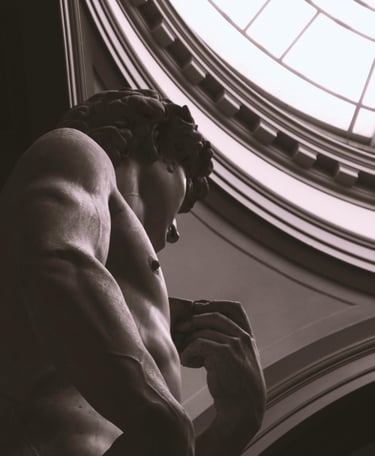
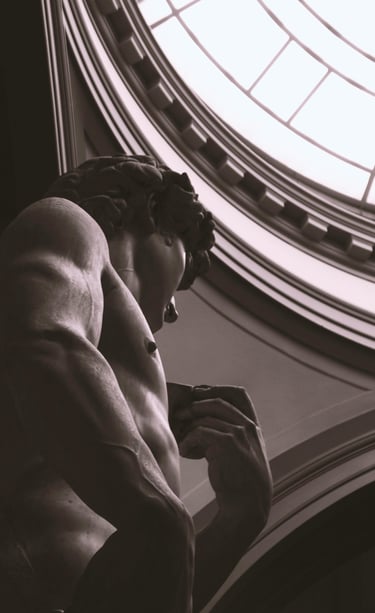
You stand beneath Michelangelo's David and suddenly the body is no longer an abstract concept. You walk streets where artists, apprentices, merchants, priests, lovers, and troublemakers moved through the same narrow passages five hundred years ago. Some of those men desired other men. Some undoubtedly wrestled with the same questions many of us still carry: How much of myself can I reveal? What happens if I am seen? What parts of me belong to me and what parts belong to society?
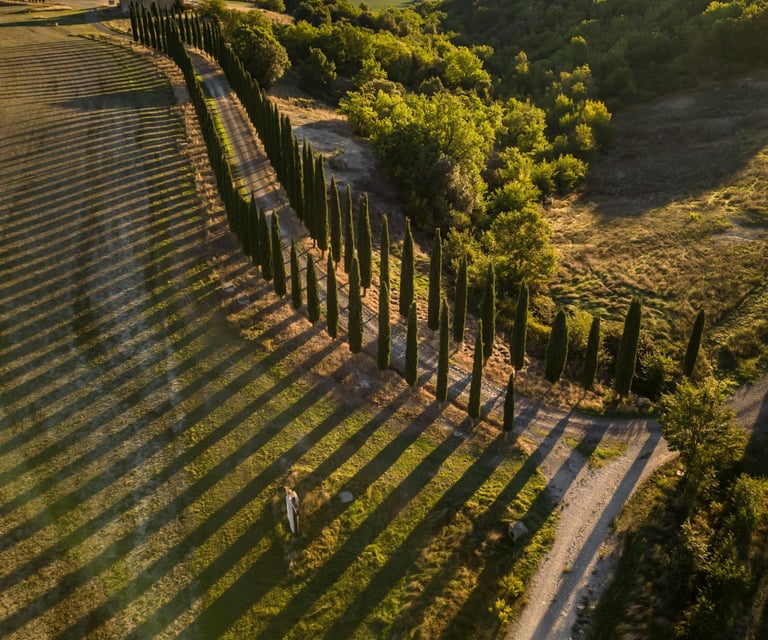
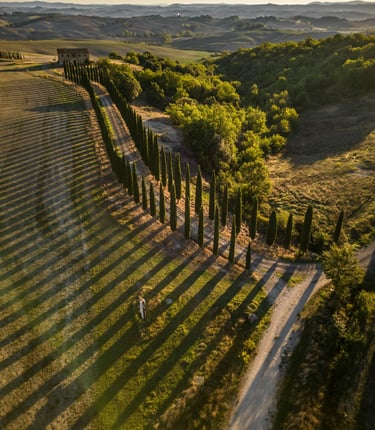
The retreat itself is not a history lesson. Most of our time will be spent in the countryside. We will move, write, swim, eat together, touch, rest, and pay attention to what is happening in our bodies. But Florence and Tuscany gives the week a larger frame. It reminds me that self-discovery did not begin with therapy culture, and queer life did not begin with modern identity politics. Human beings have been struggling toward authenticity for a very long time.
The Renaissance is often translated as "rebirth."
I don't know if I believe we ever become entirely new people.
What I do believe is that we can recover parts of ourselves that have been neglected, hidden, or forgotten. We can return to aspects of ourselves that got buried under expectation, fear, performance, or simply the busyness of everyday life.
That is the real reason I chose Tuscany. Not because it is beautiful.
But because it is a place where questions about beauty, identity, desire, and what it means to be fully human have been asked for centuries. And because I can think of few better places for a group of gay men to ask those questions again.